Overview
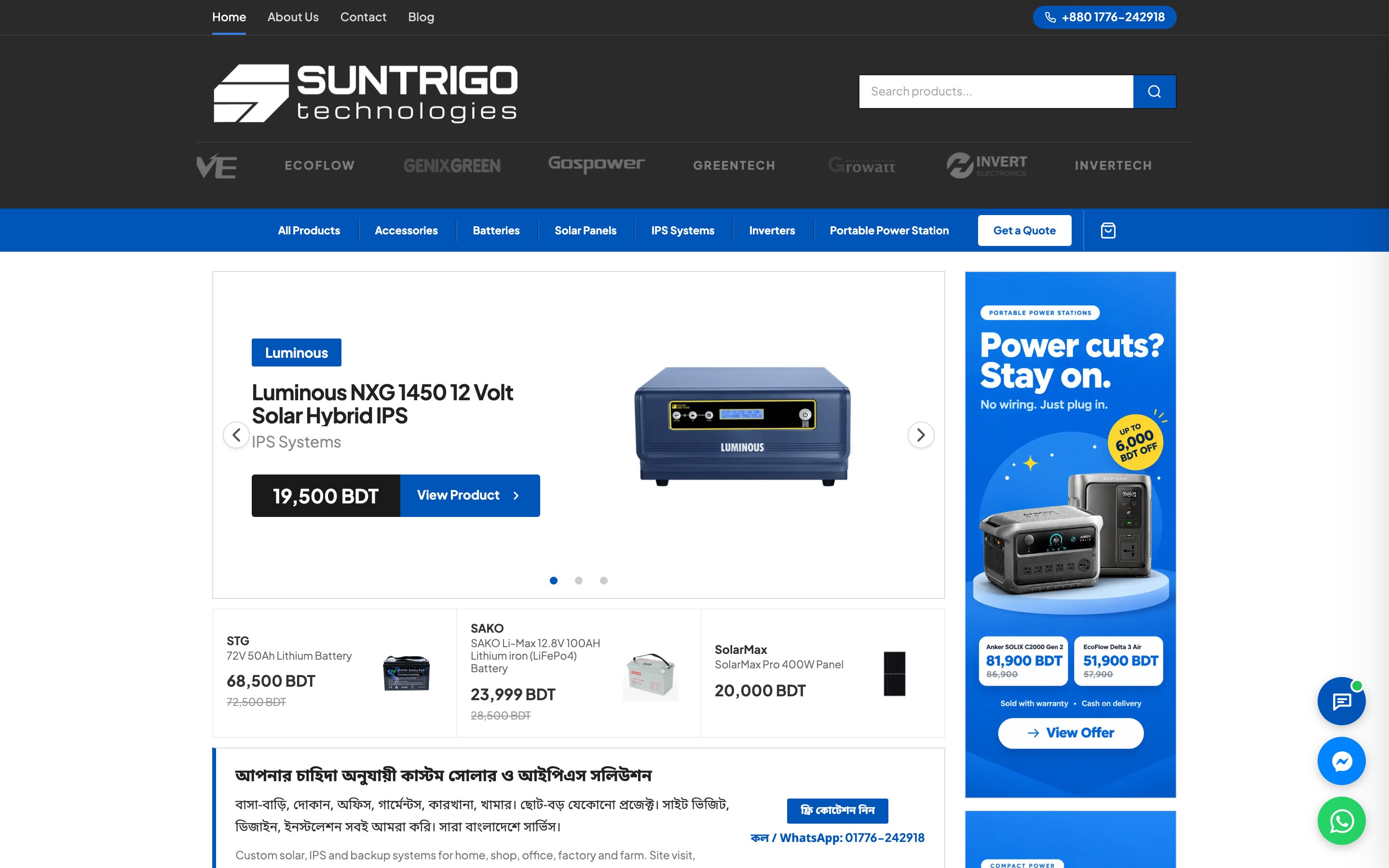
Suntrigo Technologies sells solar panels, batteries, IPS systems, inverters and portable power stations in Dhaka. I built their online shop and its admin, then grew it in steps: first the shop, then search pages that bring customers from Google, then an AI assistant that answers customers on the website, WhatsApp, Messenger and Instagram.
The problem
- Facebook was the whole shop. Every sale started as a post or a message on the Facebook page. There was no catalogue, no prices to browse and no way to order without asking.
- Invisible on Google. People searching for an inverter or a solar panel never found them.
- The same questions, all day. "Price?", "In stock?", "Delivery?" under every post and in every inbox, answered one by one by the owner.
The shop
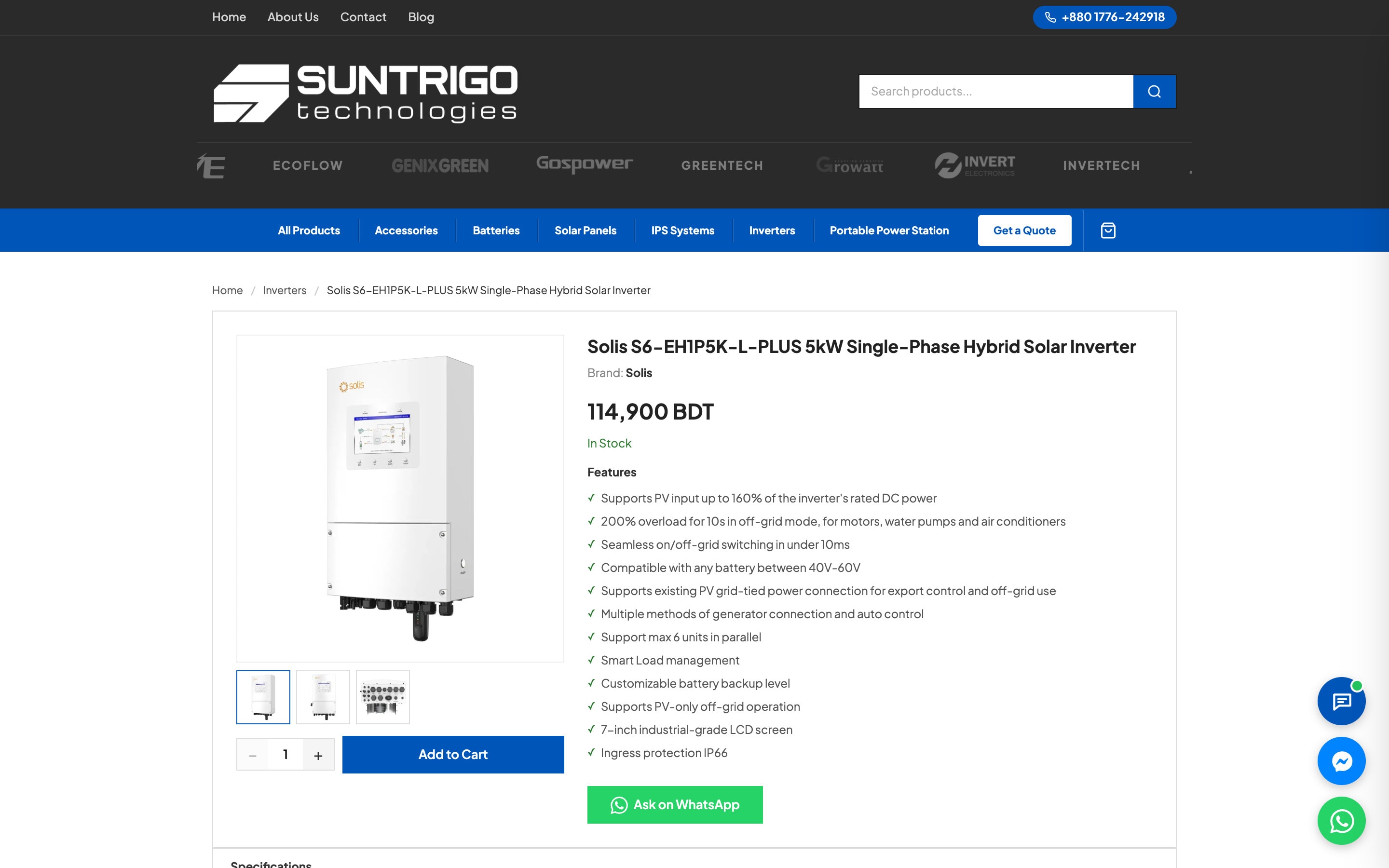
A full store on its own database: search, categories, product pages with specs, a cart and checkout with promo codes, quote requests for big projects, and WhatsApp and Messenger one tap away. Bangla where customers read it, with prices straight from the catalogue.
Found on Google
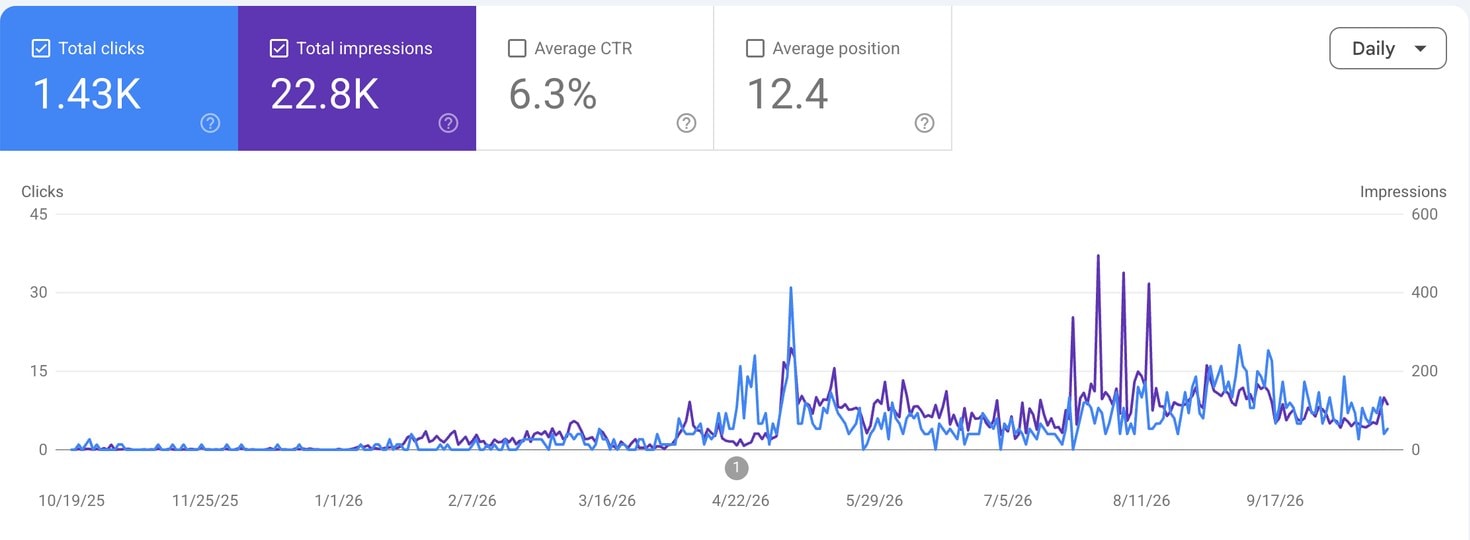
Most customers start with a search, not a store. So the shop has 299 landing pages for the things people actually type, like a battery for a given IPS or a panel size, plus brand pages and the product details Google reads. The new site went live in April 2026, and Google traffic started climbing that month.
The AI sales assistant
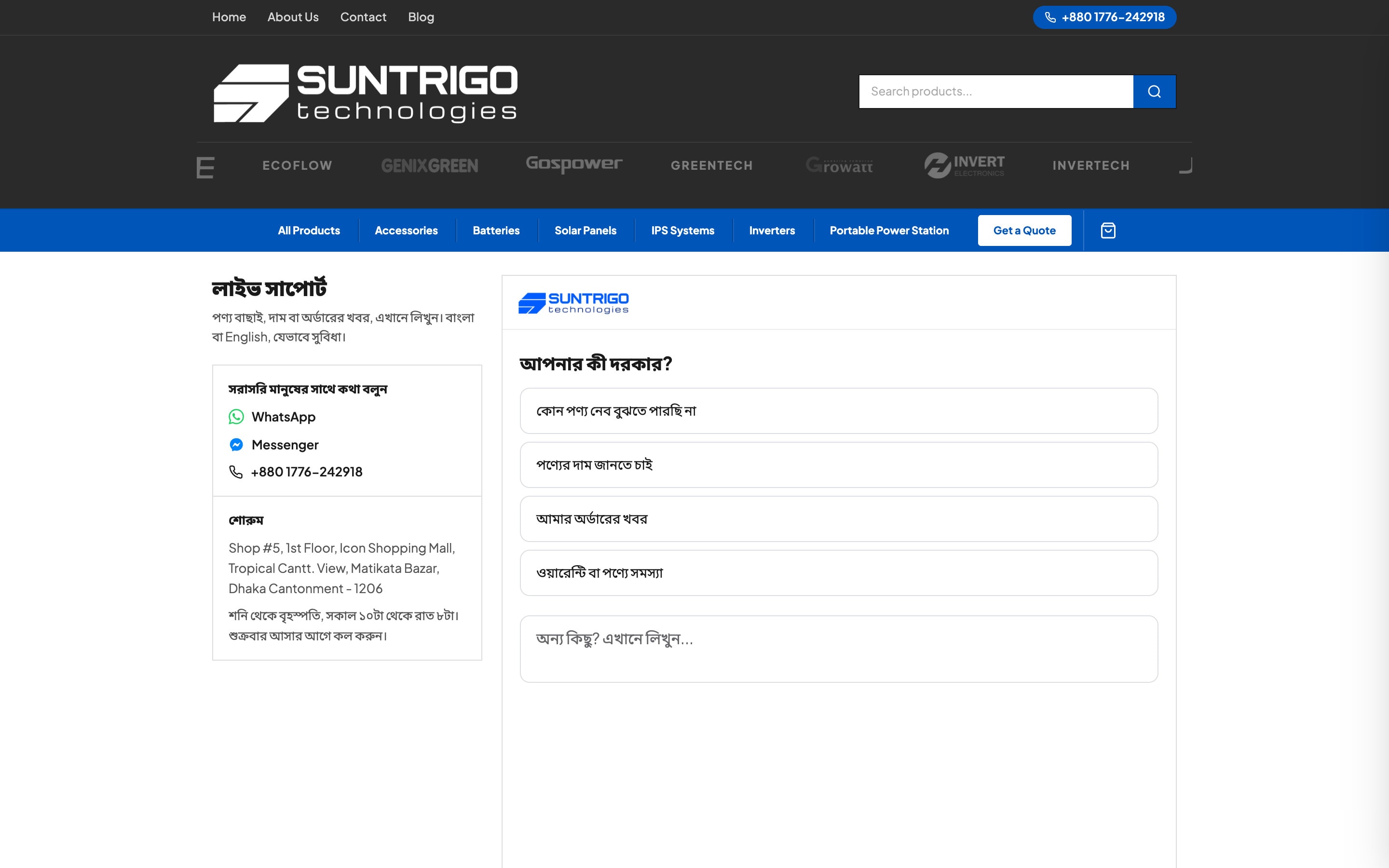
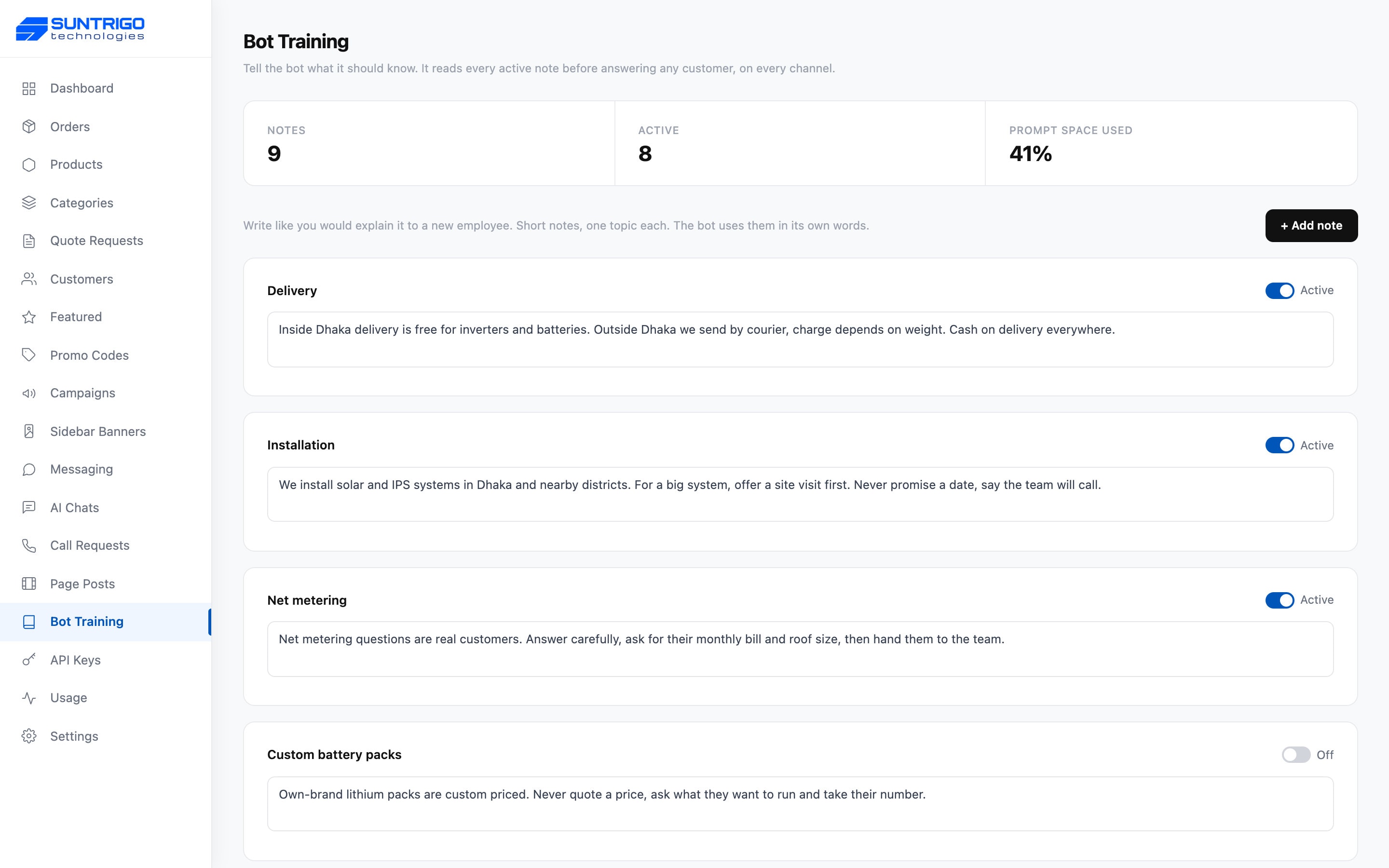
One assistant answers customers on the website chat, a full-screen support page, WhatsApp, Messenger, Instagram and under Facebook posts. It speaks Bangla first, and it only says what the shop's own database says.
- Never makes up a price. Prices, stock and warranty come from a database search on every question. If nothing matches, it says so and offers a person.
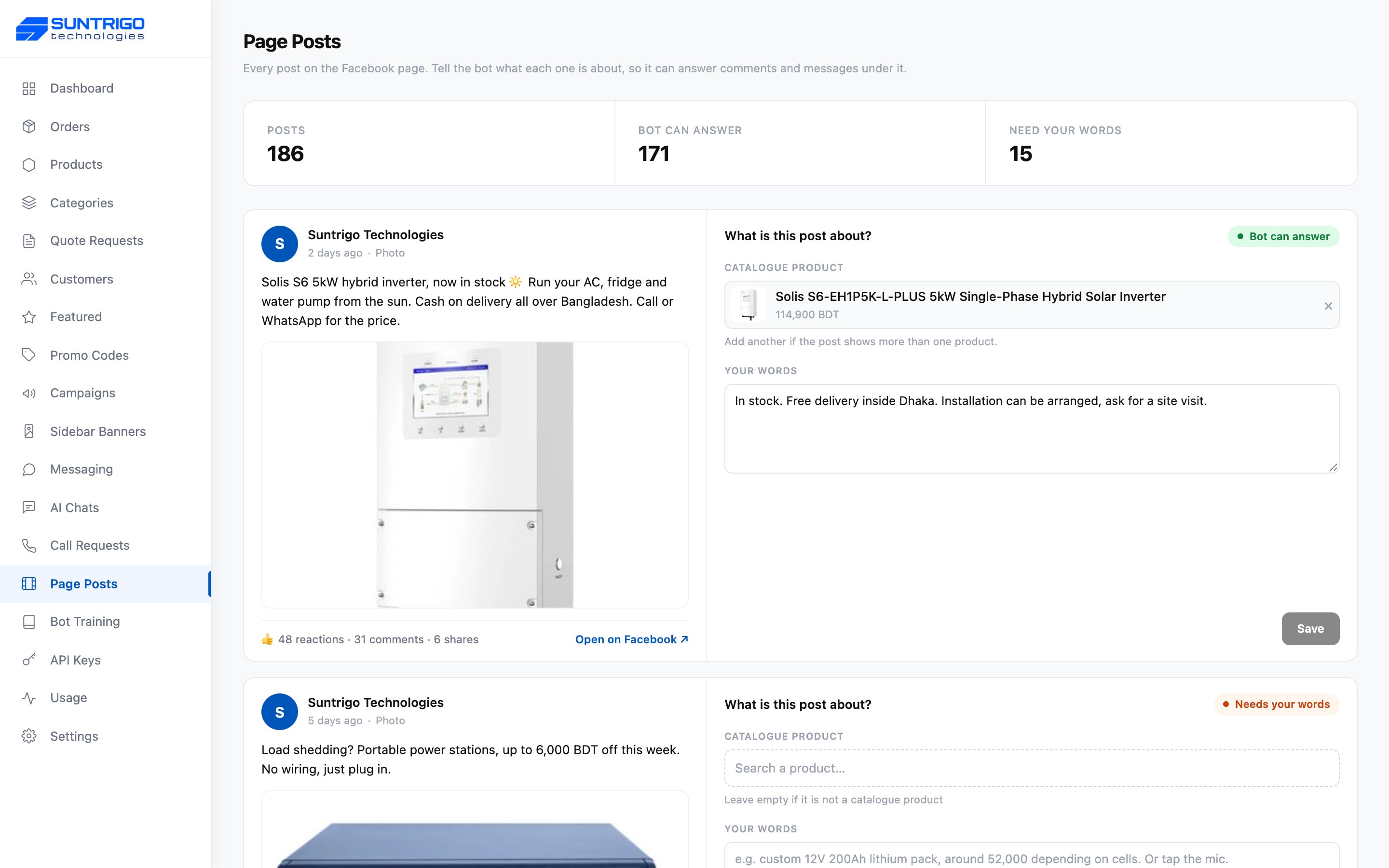
- Knows which post you mean. Every Facebook post is linked to its products, so "Price?" under a post gets the right answer: a short public reply, the details in the inbox.
- Hears voice notes. WhatsApp and Messenger voice messages are turned into text and answered like any message.
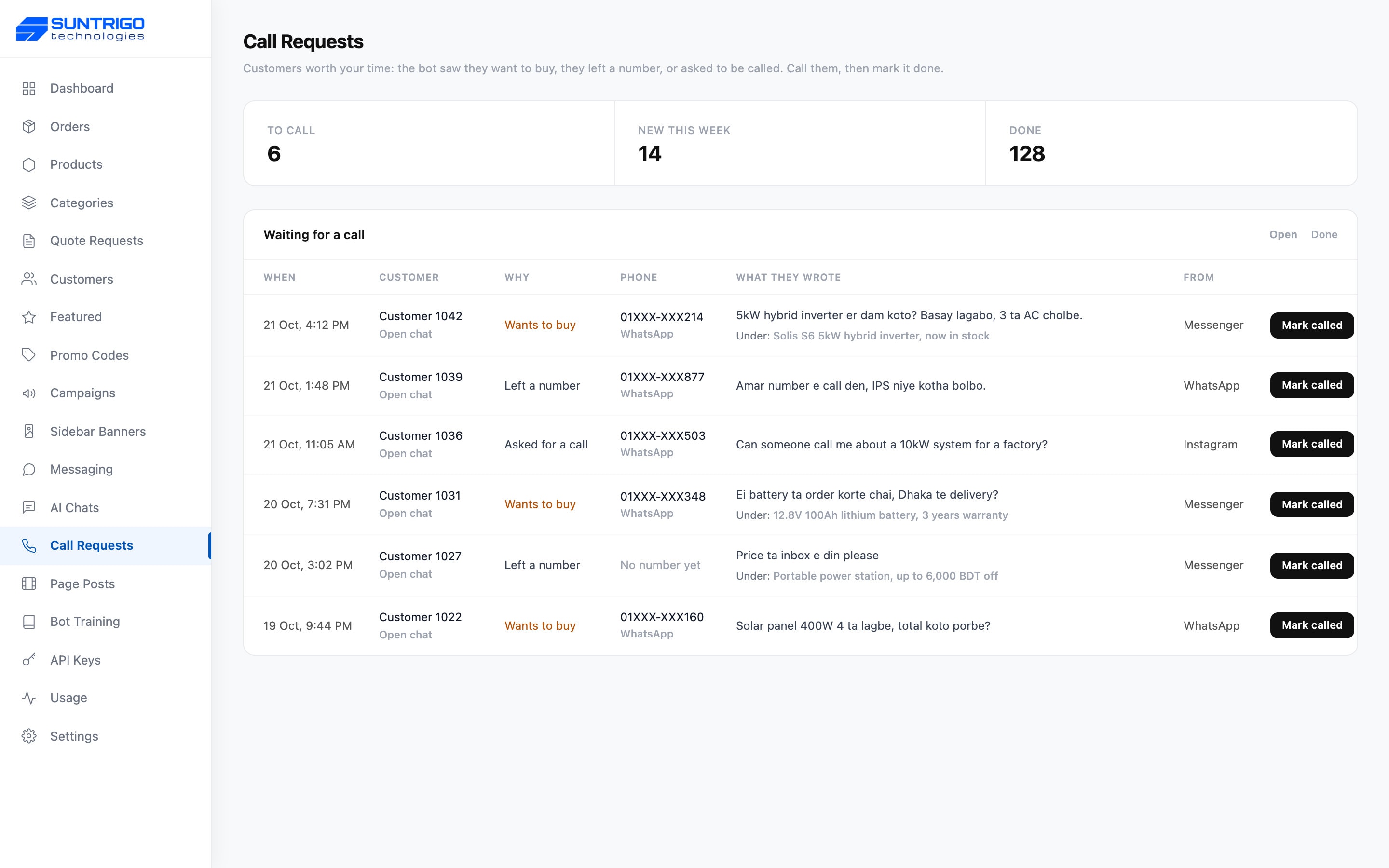
- Spots real buyers. When someone wants to buy, leaves a number or asks for a call, it lands in Call Requests for the team.
- Steps back for the team. It only starts chats with new people. Once the team replies in a thread, the bot stays quiet there.
The admin
Orders, products, categories, customers, promo codes, campaigns and banners, plus everything the assistant needs. The owner can also answer and teach it from Telegram, by text or voice.
Built to be fast
Most customers arrive on a phone, often on mobile data. So pages are built ahead of time and served from a cache, not put together on every visit.
0.6 s
until the first content shows on a laptop
0.12 s
for the server to answer a product page, served from cache
0
layout shift: nothing jumps while the page loads
- Pages made ahead of time. The home page, product pages and all 299 search pages are built once and kept in a cache, then refreshed in the background every hour, so a visitor never waits for the database.
- One button to go live. Because pages are cached, a Force Update button in the admin refreshes them the moment the owner changes a price.
- Images sized for the screen. Product photos live on Cloudflare and are resized for each phone or laptop, with the first ones loaded first.
- Nothing jumps. Every picture has its size reserved before it loads, and loading screens match the real layout, so the page doesn't shift while it fills in.
- Fewer database wake-ups. Menus and categories that rarely change are cached too, so the database is touched only when it has to be.
What it's built with
Website and admin
Data
Hosting
AI assistant
Channels
Decisions and trade-offs
The database is the only source of facts
An AI that guesses a price loses a customer's trust in one message. So it searches the catalogue every time and is not allowed to say anything the search did not return.
Meet customers where they already are
Most of the shop's buyers write on Facebook and WhatsApp, not the website. The same assistant answers every channel, so there is one thing to train and fix.
Hand off, don't hold on
The bot's job is to find the real buyers and pass them to a person, not to close every sale itself. Call Requests is where that happens.
Search pages before ads
299 landing pages cost nothing per click and keep bringing people in, where ads stop the day the budget does.
What I learned
The website was never the shop. The shop is wherever the customer is typing, and the work was making every one of those places answer like the owner would.